
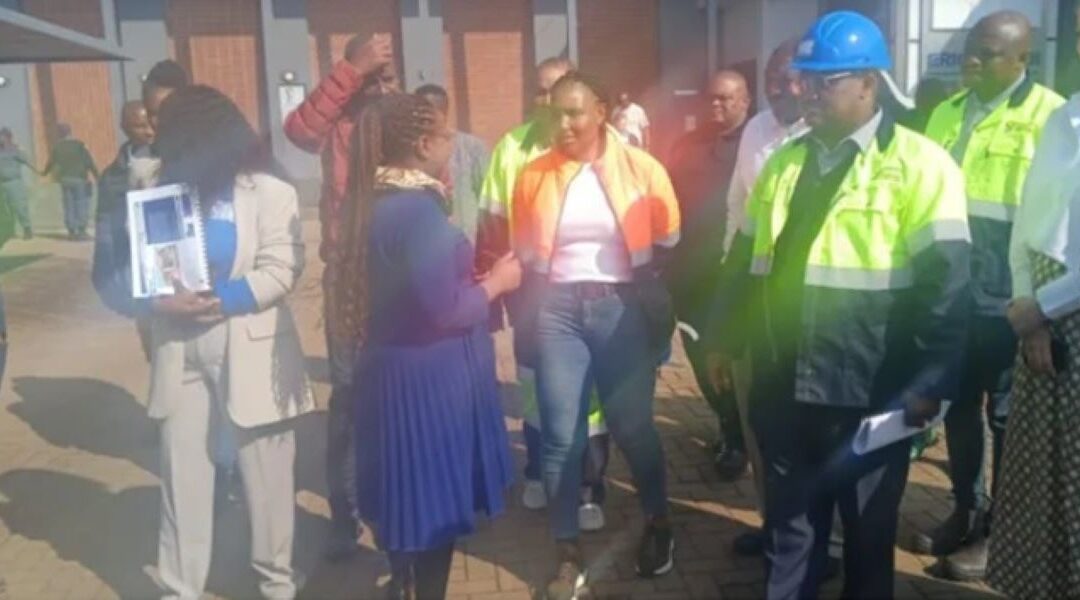
Human Settlements Minister Thembi Simelane praised the ABT initiative during her visit to the Eric Molobi Innovation Hub in Soshanguve. Image: Oupa Mokoena / Independent Newspapers
By Rapula Moatshe
The Alternative Building Technology (ABT) housing programme, supported by the National Home Builders Registration Council and the Department of Human Settlements, has been hailed for its potential to accelerate the construction of RDP houses and temporary shelters for disaster relief.
Human Settlements Minister Thembi Simelane praised the ABT initiative during her visit to the Eric Molobi Innovation Hub in Soshanguve, a facility launched in 2005 to develop innovative building methods.
She said the project aims to help the department explore affordable, weather-resistant housing solutions in response to the country’s increasingly unpredictable weather patterns.
She highlighted examples of various materials tested at the innovation hub, noting that some houses built with these materials have withstood durability tests for nearly 20 years, demonstrating their strength and resilience.
“They are water-resistant, fire-resistant, and off the grid; they can provide lighting. They are also suitable for climate response and also they have to withstand the harshness of the weather when it is hot and when it is cool they are able to retain the heat taking the temperature that is outside the building,” Simelane said.
She explained that the government no longer wants a situation where it rushes people to temporary residential units during disasters, only to pay for a short-term solution, when in reality, some people may end up living in the temporary units for 10 years or more.
Play Video
She said with the ABT the government is able to build a water-resistant house in about 10 days to two weeks, depending on the size.
This, she said, allows the government to move people in permanently, reducing emergency costs and speeding up our housing delivery.
The rollout of ABT houses is currently prioritised in provinces such as Kwa-Zulu Natal, Eastern Cape, Western Cape, North West, and Free State.
Source: IOL
