
By Staff Writer – MAC Insights
South Africa certainly does not lack infrastructure needs, but the bigger question is whether the country is doing enough to turn those needs into properly prepared projects that can attract investment and ultimately reach construction sites. The scale of the potential pipeline suggests that the challenge may not simply be identifying what needs to be built, but getting viable projects through the complex journey from concept and preparation to funding, approval and implementation. The launch of Project Preparation Bid Window III, supported as part of a R600 million government commitment to project delivery, puts that challenge firmly back in the spotlight.
Public Works and Infrastructure Minister Dean Macpherson has announced the opening of Infrastructure South Africa’s Project Preparation Bid Window III, which is intended to help public-sector institutions develop major infrastructure projects into bankable, investment-ready projects capable of proceeding to implementation. The third bid window forms part of the Department of Public Works and Infrastructure’s R600 million commitment to project delivery support and is open to qualifying projects valued at R1 billion or more.
According to the government announcement, qualifying projects must align with national development priorities and demonstrate the potential to attract funding from development finance institutions, multilateral development banks and private-sector investors, in addition to funding from the national fiscus. The stated objective is to address gaps that can prevent projects from moving from concept to construction.
It is the scale of the existing pipeline, however, that raises a more interesting question for South Africa’s infrastructure debate.
The first Project Preparation Bid Window, opened in October 2024, received 277 submissions with an estimated combined capital value of R322 billion. Infrastructure South Africa is also currently providing project-preparation support to more than 24 infrastructure projects with an estimated capital value of R148 billion, while 15 projects supported by the entity have completed their preparatory work.
These are figures supplied by the South African Government and refer to estimated project values, not amounts already spent on construction.
The figures do, however, raise an important question: if hundreds of projects have already been proposed at a combined estimated value of hundreds of billions of rand, could one of the country’s most important challenges be getting viable projects from concept to construction?
That distinction matters.
A project can be important without being ready for investment. Infrastructure South Africa says that inadequate preparation can leave projects unable to progress, identifying issues including incomplete feasibility studies, delayed approvals, unclear funding models and projects that are not packaged in a way investors can support. Those points come directly from Minister Macpherson’s explanation of the rationale behind Bid Window III.
Project preparation may sound like an administrative stage in a much larger process, but it can determine whether an infrastructure proposal is sufficiently developed to move towards funding and implementation.
Infrastructure is often discussed in terms of how much money is available or how many projects the country needs. But before a major project can move into funding and procurement, there is considerable work required to establish whether the proposal is technically and financially viable and whether it can be structured in a way that potential funders are prepared to support.
That does not mean project preparation is the only barrier to infrastructure delivery. Nor does it mean that a successfully prepared project will automatically reach construction. Funding still has to be secured, approvals have to be obtained and procurement and implementation still have to take place.
Better preparation could, however, make the transition from an infrastructure proposal to an investable project more achievable. That is the premise behind the government’s latest initiative.
For South Africa’s mining, agriculture, construction and broader industrial sectors, the importance of that transition is difficult to ignore.
These industries depend on infrastructure that allows people, goods, energy and resources to move efficiently. Roads, water systems, energy infrastructure and transport networks are not separate from economic activity; they provide much of the platform on which that activity takes place.
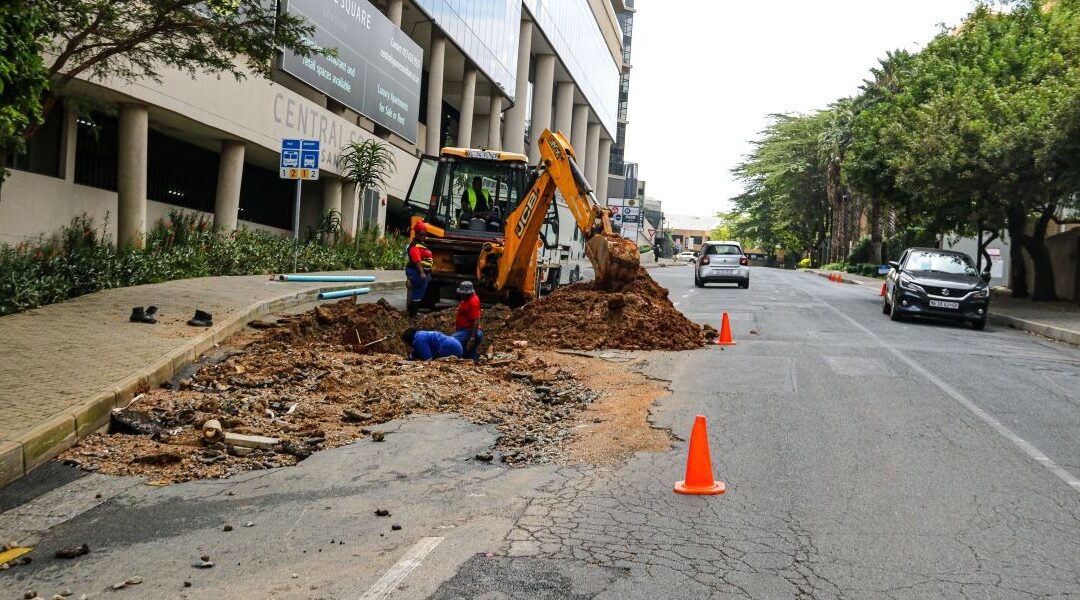
For the construction industry in particular, the difference between an infrastructure pipeline and actual infrastructure delivery is significant. A project that remains at the concept or preparation stage has not yet become a construction project. It has not yet moved into the phase where contractors, engineers, equipment suppliers and other businesses can participate in its physical delivery.
That is why the R322 billion figure needs to be viewed carefully.
The 277 submissions represent an estimated combined capital value of R322 billion. They do not represent R322 billion already committed to construction, nor do they mean that R322 billion of infrastructure spending is currently taking place. Similarly, the more than 24 projects receiving preparation support have an estimated capital value of R148 billion; that figure should not be interpreted as R148 billion already funded or under construction.
In fact, these qualifications make the figures more interesting rather than less.
They show the scale of potential infrastructure activity entering the preparation pipeline while also highlighting the distance between identifying a project and delivering it. The government’s programme is designed around closing part of that gap by helping public-sector institutions develop projects to a stage where they can potentially attract investment and proceed towards implementation.
There is also a broader issue of how South Africa finances infrastructure.
Bid Window III specifically seeks projects that can demonstrate potential to attract funding from development finance institutions, multilateral development banks and private-sector investors alongside funding from the national fiscus.
That suggests an important role for investment beyond government alone. But attracting that investment requires more than identifying an infrastructure need. Projects have to provide enough information, preparation and structure for potential funders to assess them.
This is where the concept of a credible infrastructure pipeline becomes important.
A pipeline is only valuable if projects can continue moving through the stages that separate an idea from implementation. The R600 million commitment to project-delivery support is therefore aimed at one part of that process — improving project preparation — rather than solving every challenge associated with infrastructure delivery.
The government says the intention is to help more projects attract investment and move from planning to construction faster.
Whether that ultimately happens will be the more meaningful test.
The success of Bid Window III should not simply be measured by the number of applications received or the estimated value of projects entering the preparation process. A more meaningful measure will be how many viable projects progress beyond preparation, secure the necessary funding and approvals, move through procurement and eventually reach construction.
That is where the distinction between infrastructure ambition and infrastructure delivery becomes important.
South Africa clearly has substantial infrastructure ambitions. The 277 submissions and estimated R322 billion combined capital value from the first bid window provide evidence of that. The more than 24 projects with an estimated value of R148 billion currently receiving preparation support indicate that a significant amount of work is already taking place to develop part of that potential pipeline.
But those figures are not yet the same thing as completed infrastructure.
The central question is therefore not only what needs to be built or how much money is available. It is whether the country has enough projects that are sufficiently prepared, properly structured and capable of making the difficult transition from planning to implementation.
The R600 million commitment is not, by itself, an answer to that challenge. Better preparation cannot eliminate every obstacle that a major infrastructure project may encounter.
But if it helps more viable projects move from concepts and feasibility work towards funding, procurement and construction, it could address an important part of the delivery chain.
Ultimately, South Africa’s infrastructure ambitions will not be judged by the number of projects appearing on a list or the estimated value attached to them.
They will be judged by what gets built.
The real test is whether more of the country’s infrastructure potential can make the journey from paper to investment, from investment to construction, and from construction to infrastructure that works for the people and businesses that depend on it.
Source: EIN Presswire, “Minister Dean Macpherson on Infrastructure South Africa’s Opening of Project Preparation Bid Window III”, 29 July 2026. The underlying announcement was issued by the South African Government’s Department of Public Works and Infrastructure on 27 July 2026.
The figures and programme details cited in this article are sourced from the above announcement. MAC Insights’ interpretation and commentary are editorial analysis.
